
The stories we’ve been telling about climate — and why we need different ones
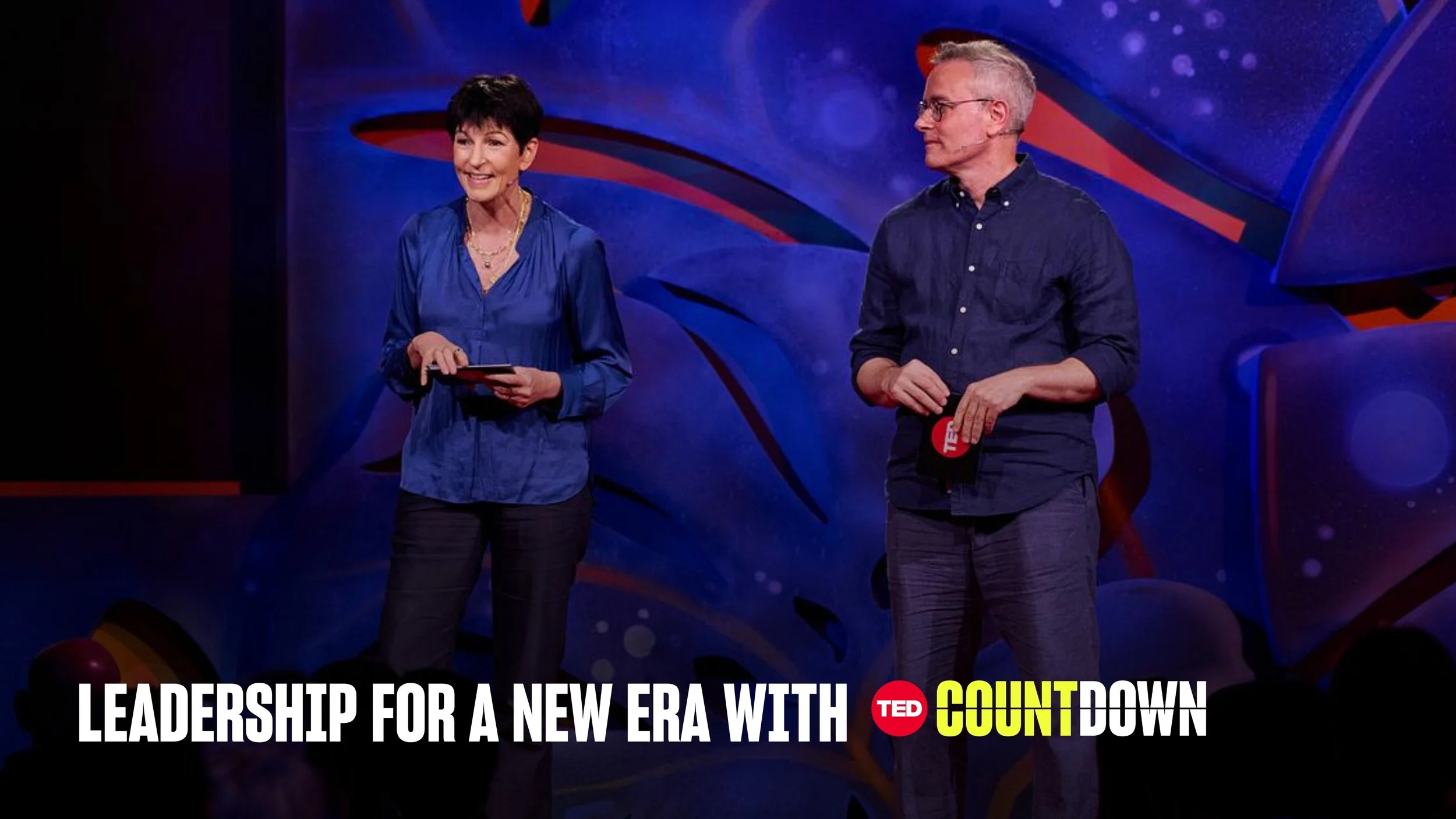
You can read the original TED Countdown Linkedin Blog Post here.
There is a strange paradox at the heart of the climate story right now. The 2020s were defined as the “Decisive Decade” when global greenhouse gas emissions had to be cut by 50% to give the world a reasonable chance of staying within a safe operating zone. Instead, emissions hit a record high last year. The last three years were the hottest on record. And yet global media coverage of climate fell 14% in 2025 — now 38% lower than its 2021 peak.
The easy explanation points outward — to disinformation, political polarization, the flood of competing crises. These are real. But there is a harder answer, and it asks those of us telling the climate story to look at ourselves.
Countdown’s work is fundamentally about storytelling. It’s what TED does — through talks, films, podcasts and live events — and our role as TED’s global climate initiative is to shift the narrative, accelerate solutions and build the bold collaboration the moment demands. When the conversation grows quieter even as the physical reality intensifies, that is not only a political failure. It is, in part, a storytelling one.
The problem, I’ve come to think, is not that people don’t care about climate. It’s that we have repeatedly asked them to care in ways that make caring feel like a burden — or worse, a loss.
The first of these is doomerism. A relentless focus on catastrophe paralyzes people and renders them helpless — often before they’ve had the chance to discover that they might be useful. Getting the balance right between the scale of the crisis and the proliferating practical pathways out of it has been a persistent failure. Part of this is structural: generating urgency about something you cannot see or touch, which unfolds unevenly across time and geography, is genuinely hard. Climate doesn’t arrive at the door the way a storm does. But that is precisely why the storytelling has to work harder.
The second is moralizing, and the demonizing that too often follows. In calling out genuine bad actors, the climate movement has simultaneously guilt-tripped millions of people. They’re trying to get by, to build a decent life, to give their children something better than they had. The suggestion that they need to want less — to embrace austerity as a form of virtue — alienates the very people any serious transition will require.
The third failure is a deeper one: not reckoning honestly with just how overloaded people are. We’re more than a decade into what the historian Yuval Noah Harari first described as the era of god-like technological powers threatening to make ordinary people feel obsolete. We’re now living that reality. People of all generations are frightened about their livelihoods and their sense of meaning, with very little agency to hold those driving change to account. I find myself awake at night turning over problems far outside my control — and I know from my own kids, friends and family that I’m not alone.
Climate change is not a single existential threat — it’s one of several, sitting alongside geopolitical rupture, economic volatility and the disorienting acceleration of AI.
Adding to the burden of worry, without offering credible pathways forward, doesn’t move people. It exhausts them.
Taken together, these patterns reveal a category error — treating climate communication as a problem of information, when it is really a problem of meaning. We’ve brought real cleverness: sophisticated data, powerful imagery, global platforms. What we’ve been slower to develop is the wisdom to understand how people actually change — how trust is built, what activates agency rather than despair, what makes someone feel part of a possible future rather than blamed for the present one.
And yet something is genuinely shifting — and this is the part of the story that doesn’t get told nearly enough.
Over the last few weeks I’ve spent time with entrepreneurs building what I’d call clean tech 2.0 — people scaling affordable clean energy, reinventing grid infrastructure, cleaning up industry. They describe technologies moving faster than expected, battery storage crossing new thresholds, extraordinary talent flowing into the work of building a better future (more on that to come in my next post). I’ve also been listening to social scientists experimenting with new ways to surface collective wisdom on divisive topics, and to young people from many backgrounds demanding accountability in how AI is developed and insisting on inclusion in tomorrow’s economy.
This is a moment for builders.
Builders of abundant, affordable clean energy. Builders of new forms of civic participation. Builders of alliances that cut across borders and generations. As the saying goes: there are decades when nothing much happens, and then there are months when decades happen. That is what’s happening right now.
For those of us who understand the scale of the crisis, this is a moment to stop positioning climate as a single overriding issue competing at the top of an impossible list — and to recognize it for what it is: a vital dimension of everything people already care about most.
Prosperity, security, clean air and water, economic opportunity, a liveable world for the next generation — these are not separate concerns to be weighed against climate action. They are the same concern, differently named.
The next economy — the one we’re building right now — has to be an economy where people and nature thrive together. Our role, as storytellers, is to look for the builders, the pragmatic problem solvers and the bridge-builders who know that a kinder, more accountable future is possible. To shine a light on real stories, and to point to a pathway forward, that is practical, attainable and hopeful.
With hope,
Lindsay Levin, Head of TED Countdown
